


F rom nostalgia to innovation: reshaping the experience of yachting in Greece
I. Aesthetic
Captain Loucas, now in his eighties and still at sea, remembers Mykonos in the 1970s, before marinas, before reservations, before the idea that a place could be full. You arrived and found your space; the sea decided the rest.
It was not only a different way of sailing, but a different experience of the sea, one defined by space, freedom, the quiet possibility of solitude, and a sea still alive beneath the surface.
That experience remains the reference point for yachting today. What has changed are the conditions that made it possible.
It did not depend on coordination, availability, or access. It was simply there.
II. Shift
The vocabulary has changed. Once it was space, wind, arrival, waiting. Now it is availability, capacity, bookings, turnover. While the sea is changing, the experience is shaped far more by how it is used and organised.
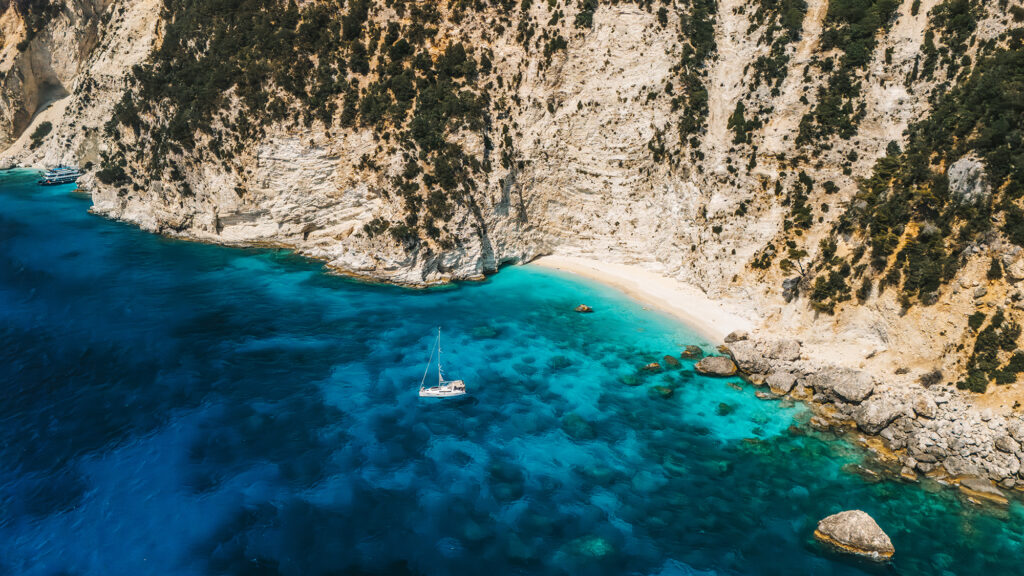
At scale, the shift is unmistakable. Greece receives more than 10,000 distinct yacht visits each year, placing it among the most active yachting destinations globally, while its berthing capacity remains significantly lower than comparable Mediterranean destinations. The result is not abstract; it is experienced through density and proximity, and through the gradual shift from open space to shared space.
The experience no longer unfolds in the same way. As space becomes more limited and movement more structured, the sea is encountered differently: less as something to respond to, and more as something to move through.
Within this shift, a different way of being at sea begins to emerge.
© Joe Snowdon Photography
III. Awareness
Suzanne, a young marine scientist who spent a season sailing these waters, moves through them differently. She notices what often goes unseen: how colour changes with depth, how seagrass shifts with the current, and how life appears briefly at the surface before disappearing again.
She sails, but she also observes, not as a separate activity, but as part of the same experience. Increasingly, this way of being at sea is becoming more common. Sailors do not only move through these waters; they begin to interpret them, to read them, and in doing so to contribute to understanding them.
What emerges is not a contradiction with the past, but a response to changing conditions: a shift from experiencing the sea as given to sustaining it through attention, knowledge, and use.
In this sense, observation itself becomes a form of innovation, expanding how the sea is understood and how it is ultimately used.
IV. Innovation
Innovation at sea is often defined through new fuels, propulsion, and digital tools. But it is not only technical. Some of it is felt.
The experience of yachting is becoming less about more: more speed, more range, more capability and more about preserving what once defined it: space, freedom, and the quiet possibility of solitude.
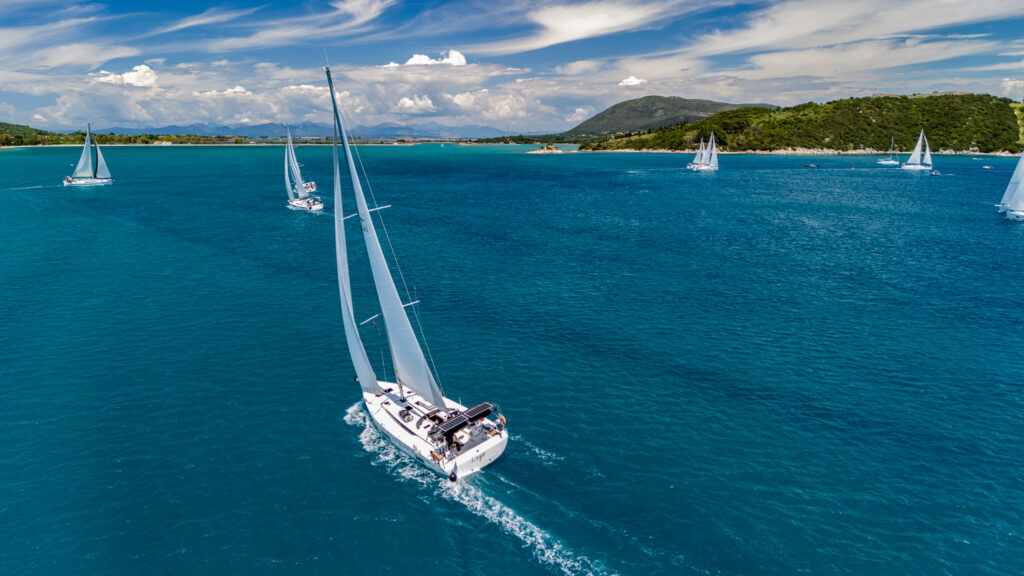
A quiet anchorage, even in high season. Water clear enough to read the seabed beneath the hull. Movement slowing just enough for what lies below to reappear: a turtle surfacing briefly, the outline of seagrass shifting with the current.
This is where innovation begins to shape whether that experience can still exist at all.
Across the Mediterranean, this shift is taking form through infrastructure, more structured anchoring in sensitive areas, and the introduction of eco-moorings, alongside a growing use of data to better understand how these environments are used over time.
In Greece, this transition is beginning to be formalised. Initiatives such as the eco-mooring commitment led by Sustainable Sailing Greece bring together operators, marinas, and institutions to align how anchoring is managed with the realities of marine protected areas, translating direction into practice.
What appear as two different ways of being at sea – one rooted in experience, the other in observation – are increasingly converging. The ability to read the sea, the knowledge we build about it, and the ways we anchor and move through it are no longer separate; together, they begin to define how that experience can be sustained.
What was once an aesthetic of nostalgia: the space, the freedom, the quiet possibility of solitude need not be confined to the past. It can be sustained through how innovation shapes the experience itself.
© Joe Snowdon Photography
**
Jenny Ioannou is the founder and director of Humanitas, an impact-driven communications agency focused on public awareness, science communication, and ocean protection.